

Quick answer: Faith affects health by shaping daily habits, mindsets, and routines. These elements influence how the body works. Regularly practising faith can lead to a longer life. It also helps people manage stress better and make healthier choices.
Harvard and Loma Linda University studies show regular faith practice links to:
- Lower mortality
- Reduced blood pressure
- Decreased risk of heart disease and cancer
In short, faith is not separate from health — it is one of its strongest foundations.
For those of us building a life of Sovereign Living, this is not a surprise.
The framework stands on three pillars: Sovereign Health, Sovereign Mind, and Sovereign Wealth. Faith connects them all, like roots under a tree. You do not see the roots, but everything above ground depends on them.
This article examines how faith relates to health. It uses clear comparisons and real research.
Plus, it offers a practical eating guide: the Staple-First Method. By the end, you will see why caring for the body is not a distraction from the spiritual life but an expression of it.
What Does Faith Have to Do With Physical Health?
Think of faith and health like a riverbed and a river.
The riverbed does not make the water, but it decides where the water flows. Faith works the same way. It rarely shows up as a single dramatic moment of healing.
It gently shapes your daily choices—what you eat, how you relax, how you deal with stress, and who you hang out with. These choices shape your physical life.
Scripture has always treated the body and spirit as one connected whole.
Paul said the body is “a temple of the Holy Spirit.” He urged believers to honour God with their bodies (1 Corinthians 6:19–20). John’s blessing was that believers would “be in health, even as your soul prospers” (3 John 1:2).
The biblical vision is clear: a thriving soul and a healthy body go hand in hand.
Modern science is now catching up to what people of faith have lived for centuries.
What Does the Research Say About Faith and Health?
The evidence is very strong and comes from top institutions around the world.
The Harvard Nurses’ Health Study
Researchers at the Harvard T.H. Chan School of Public Health followed nearly 75,000 women over 16 years. Women who attended religious services more than once a week had a 33% lower chance of dying during the study. In contrast, those who never attended faced a higher risk. They also had roughly 27% lower cardiovascular mortality and 21% lower cancer mortality.
The findings came out in JAMA Internal Medicine in 2016. They remained strong. Researchers checked if healthier people attend more often.
Lead researcher Tyler VanderWeele said there’s “something powerful about the communal experience.”
The Loma Linda Blue Zone
Loma Linda, California, is the only Blue Zone in the U.S. It’s one of the few places worldwide where people live longer.
Its long life comes from a community of Seventh-day Adventists. Their faith shapes how they live. Loma Linda University’s Adventist Health Studies found something interesting. Vegetarian Adventist men live nine years longer than other men. This shows that a vegetarian diet can greatly improve health.
Vegetarian Adventist women live six years longer than the general population. Their plant-based diet is grounded in Scripture (Genesis 1:29). They also observe a weekly Sabbath rest. A strong community is important. Regular exercise matters too. They avoid smoking and alcohol. These are key parts of their lifestyle.
Faith and “deaths from despair.”
A 2020 study in JAMA Psychiatry found that attending religious services is associated with lower mortality. This includes deaths from drugs, alcohol, and suicide. Researchers call these “deaths from despair.”
The pattern is consistent across populations, decades, and continents. Community and habit associate faith with longer, healthier lives.
Five Ways Faith and Health Are Connected
To make the link concrete, here are five mechanisms — each with a comparison to help it stick.
| Faith practice | Comparison | What it does for the body |
|---|---|---|
| Worship & community | Like a vitamin you cannot swallow | Regular gathering reduces isolation, a known risk factor for early death — comparable in impact to other major lifestyle factors |
| Prayer & gratitude | Like a brake pedal for the nervous system | Activates the body’s “rest and digest” response, lowering heart rate and blood pressure |
| Sabbath rest | Like leaving a field fallow so it stays fertile | Built-in weekly recovery protects against burnout and supports better sleep |
| Stewardship of the body | Like maintaining a house you have been entrusted with | Treating the body as a “temple” motivates healthier eating and self-care |
| Hope & purpose | Like a compass in a storm | A sense of meaning builds resilience and is linked to lower rates of depression and despair |
Let us look closer at two of these, because they connect directly to how you live each day.
Gratitude: Faith’s Quiet Medicine
Gratitude is a spiritual discipline with measurable physical effects.
In a study with 119 women, a two-week gratitude practice boosted well-being, sleep quality, and optimism. It also lowered blood pressure.
A study with nearly 5,000 adults found that those who felt more gratitude had:
- Lower heart rates
- Lower blood pressure
- Less stress
- Better sleep
UCLA Health says that keeping a gratitude journal lowers diastolic blood pressure. It can make a real difference.
Scripture said it first: “A merry heart doeth good like a medicine” (Proverbs 17:22). A thankful heart, it turns out, is also a healthier one.
Rest: The Sabbath as a Health Strategy
We treat rest as a reward for finishing work. Scripture treats it as a command and a gift — a rhythm woven into creation itself.
Think of the body like farmland. If you work a field nonstop, it gets worn out and produces less. A field left fallow on a schedule stays fertile for generations.
The weekly Sabbath is a time for rest. It’s a chance to recover, build relationships, and worship.
The Loma Linda community’s shared day of rest is a quiet factor in their amazing longevity.
The Staple-First Method: Where Faith Meets the Plate
Here is where faith and health become deeply practical.
The Staple-First Method is a simple way to eat well, and it carries a spiritual logic that maps perfectly onto a life of faith.
The main idea is simple: start every meal with basic whole-food staples. Eat whole grains, legumes, root veggies, leafy greens, and seeds first. Then, add other foods. Just as a house is only as strong as its foundation, a diet is only as strong as what it is built on.
The parallel to faith is striking.
Jesus is the cornerstone for a stable life (Ephesians 2:20). Build on sand, and your house will fall. Build on rock, and it will stand strong (Matthew 7:24–27).
The Staple-First Method applies the same wisdom to the plate. Focus on the cheapest, oldest, and most nourishing foods. These are the ones that have supported communities for thousands of years.
By choosing them, you’ll keep your health strong. Building on processed convenience foods is like building on sand.
This is not a new idea. It is one of the oldest comparisons in Scripture.
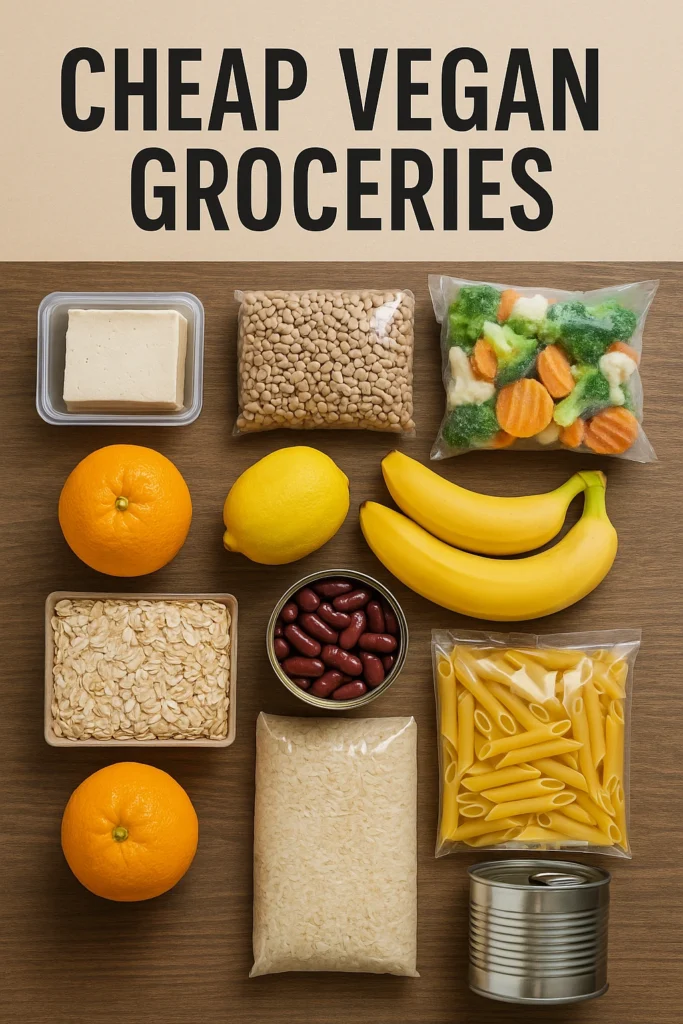
The Daniel Comparison: Two Diets, Two Outcomes
In the book of Daniel, the king offered the young Daniel and his companions rich food and wine. Daniel asked instead for a diet of vegetables (“pulse”) and water for ten days.
At the end of the test, those who ate the simple plant-based foods looked healthier and stronger. They seemed “better and fatter in flesh” than those who enjoyed the royal delicacies (Daniel 1:8–16).
The Staple-First Method has roots that go back thousands of years.
It emphasises simple staples chosen with care. This approach leads to better health compared to rich, indulgent options. It is a comparison that still holds today.
A Staple-First Comparison: Two Plates
| Convenience-First Plate | Staple-First Plate | |
|---|---|---|
| Built on | Processed, packaged food | Wholegrains, legumes, vegetables |
| Cost | Higher over time | Lower, more affordable |
| Fibre & nutrients | Often stripped away | Naturally abundant |
| Spiritual posture | Convenience and craving | Stewardship and gratitude |
| Long-term outcome | Higher chronic-disease risk | The pattern seen in the world’s longest-lived people |
The science backs the second column.
In the Adventist Health Studies, eating nuts several times a week reduced the risk of heart attack by up to 50%.
Choosing wholegrain bread lowers the risk of non-fatal heart attacks. It can reduce that risk by about 45% compared to white bread.
Simple staple choices, repeated daily, change the trajectory of a life.
How to Begin: A Sovereign Living Starting Point
You do not need to overhaul everything at once. Faith grows by small acts of faithfulness, and so does health.
Here is a gentle starting framework that joins the spiritual and the physical.
- Anchor your day in gratitude. Before or after a meal, name three things you are thankful for. This is both worship and, as the research shows, a measurable health practice.
- Make one meal Staple-First each day. Start with a base of a wholegrain, a legume, and a vegetable. Build from there. Treat it as an act of stewardship, not restriction.
- Protect a weekly rest. Guard one day — or even a few hours — for rest, relationship, and worship. Let your body lie fallow so it stays fertile.
- Gather in community. Faith practised together leads to greater benefits than faith practised alone. Show up, in person, regularly.
- See your body as a trust, not a project. You are not trying to earn anything. You are caring for something someone gave you. That posture changes everything.
Frequently Asked Questions
Does faith really improve physical health?
Regular faith practice is linked to better health. It can lower mortality rates, blood pressure, and the risk of heart disease and cancer. Faith largely influences health through the habits, community, and mindset it fosters.
What does the Bible say about taking care of your body?
Scripture says the body is a temple of the Holy Spirit. It tells believers to honour God with their bodies (1 Corinthians 6:19–20). And It also shows food as a gift. It highlights healthy, plant-based eating in a positive light, like in Genesis 1:29 and Daniel 1.
Can prayer and gratitude actually lower blood pressure?
Yes. Studies, including randomised trials, show that gratitude practices lower blood pressure. They also reduce heart rate. These practices help improve sleep by triggering relaxation in the body.
What is the Staple-First Method?
The Staple-First Method focuses on eating. It starts every meal with affordable, whole-food staples. These include whole grains, legumes, root vegetables, and greens. You add other ingredients after these basics. It mirrors the spiritual principle of building life on a strong foundation.
Why do faith communities like Loma Linda live longer?
Communities like the Seventh-day Adventists of Loma Linda eat a plant-based diet. They rest on the Sabbath each week, and have strong social ties and exercise regularly. They also avoid harmful substances. Their faith shapes all of these habits, and together they add years of healthy life.
The Sovereign Living Takeaway
The connection between faith and health is not mystical or vague. It is daily, practical, and measurable. Faith sets the riverbed; your habits follow its course.
It brings you together in community. Calms your nervous system with prayer and gratitude. It allows for rest. It helps you see your body as something to care for, not just a machine to use.
The Staple-First Method is faith on your plate. It’s like Daniel’s conviction, applied one meal at a time.
Build on the foundation.
Honour the temple.
Give thanks.
This is Sovereign Health, and it begins today.
.
