
Introduction
Here’s your guide to plant-based protein sources.
Find out how to obtain enough protein if you are vegan.
Are you vegan or vegetarian? Or you want to eat more plant-based meals. If so, you might be asking yourself, “Am I getting enough protein?”
It’s one of the most common questions people ask when they switch from an omnivorous diet.
Protein is essential for making and fixing tissues. It helps grow muscles, regulates hormones, and boosts immunity. Yet, a common myth persists: plant-based diets don’t provide enough protein.
The truth is, with a bit of planning, a plant-based diet can easily meet or even exceed your protein needs.
In this guide, we’ll cover the best plant-based protein sources. We’ll show you how to combine them for complete nutrition. Plus, we’ll share tips to help you get the most out of your intake.
By the end, you’ll see that plant-powered protein is not only possible but also tasty and versatile.
Understanding Plant-Based Protein
Carbohydrates and lipids are both macronutrients, much like protein. Your body needs it for many functions.
It is made of smaller units called amino acids. Some are “essential” because your body can’t produce them.
Animal proteins—such as meat, eggs, and dairy—are complete proteins. They have all nine essential amino acids. Many plant foods are incomplete proteins, lacking one or more essential amino acids.
But don’t worry—this doesn’t mean that plant-based eaters will face protein deficiency.
Eating different plant foods like grains, legumes, nuts, and seeds helps you get all the amino acids your body needs.
Studies indicate that a well-designed plant-based diet can fulfil the protein requirements for all individuals.
Daily intake: For every kilogram of body weight, you need 0.8 grams of protein.
However, athletes and active individuals may require 1.2–2.0 grams per kilogram of body weight.
Top Plant-Based Protein Sources
Let’s dive into the foods that can help you power up your protein intake.
1. Legumes
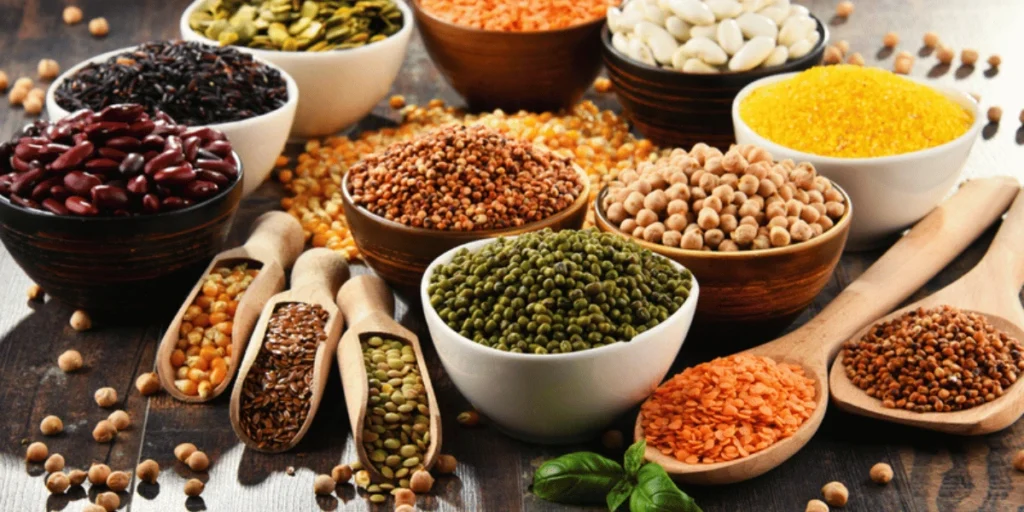
Legumes, including beans, lentils, chickpeas, and peas, are a cornerstone of plant-based nutrition. They are high in protein, fibre, and essential micronutrients like iron and folate.
- Lentils: Each cooked cup has roughly 18 grams of protein.
- Chickpeas: Around 15 grams per cooked cup.
- Black beans and kidney beans: 14–15 grams per cooked cup.
Cooking tips: Soak beans overnight to improve digestibility and reduce cooking time. Try adding lentils to soups, chickpeas to salads, or black beans to stir-fries.
2. Soy Products
Soy is one of the few plant-based complete proteins.
- Tofu: 10–20 grams of protein per ½ cup, depending on firmness.
- Tempeh: About 21 grams per ½ cup.
- Edamame: 17 grams per cup, making it an easy snack.
Fermented soy foods like tempeh are also good for your gut health because they are full of probiotics. Incorporate tofu in stir-fries, tempeh in sandwiches, or edamame as a protein-packed appetiser.
3. Grains
Grains usually have less protein than legumes. But they can team up with other plant foods to create complete proteins.
- Quinoa: A rare grain that’s a complete protein, with 8 grams per cooked cup.
- Oats: About 6 grams per cup, perfect for breakfast bowls.
- Brown rice has 5 grams of protein per cup, and it is commonly eaten with beans to get all the amino acids.
Grains are rich in nutrients, B vitamins, and fibre. They are key to a balanced plant-based diet.
4. Nuts & Seeds
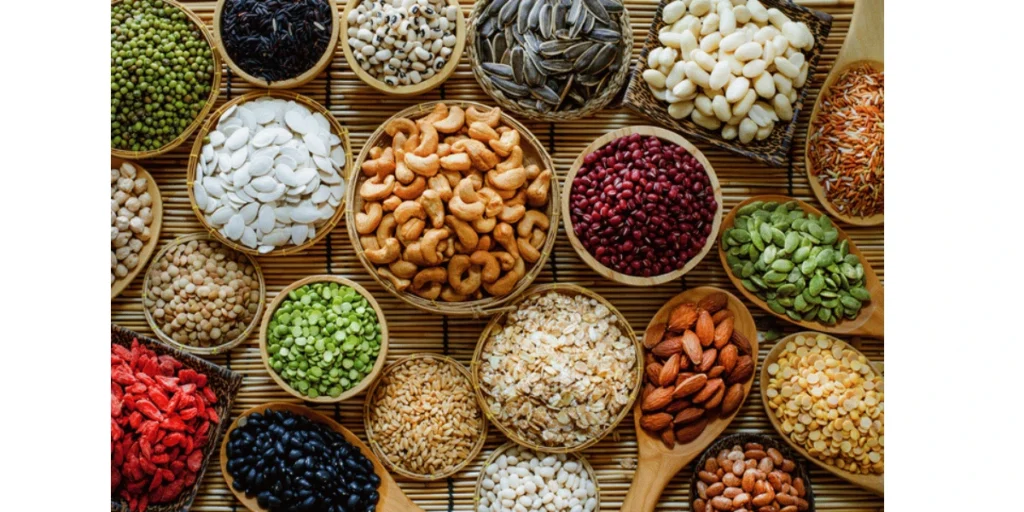
Nuts and seeds are protein-dense and packed with healthy fats.
- Almonds: 6 grams per ounce.
- Chia seeds: 5 grams per 2 tablespoons.
- Hemp seeds: 10 grams per 3 tablespoons.
- Pumpkin seeds: 7 grams per ounce.
Add seeds to smoothies, salads, or oatmeal. Enjoy nuts as snacks to increase your protein intake all day.
5. Vegetables with Protein
Certain vegetables provide surprising amounts of protein:
- Spinach: 5 grams per cooked cup.
- Broccoli: 4 grams per cup.
- Peas: 9 grams per cup.
- Kale: 3 grams per cup.
Veggies might not have as much protein as beans or soy. They are rich in nutrients. They also boost intake, especially when paired with other protein sources.
6. Plant-Based Protein Powders
For athletes or anyone needing extra protein, powders can be convenient:
- Pea protein: High in branched-chain amino acids, good for muscle recovery.
- Rice protein: Easily digestible and hypoallergenic.
- Soy protein: Complete protein ideal for muscle building.
Use powders in smoothies, baking, or protein bars when additional protein is needed.
Combining Plant Proteins for Complete Nutrition
One concern often raised about plant proteins is that they are “incomplete.” However, you don’t need to combine proteins at every meal.
Eating different protein sources daily helps you get all the essential amino acids.
Classic combinations include:
- Rice + beans
- Hummus + whole wheat pita
- Peanut butter + whole grain bread
Simple combinations, such as oatmeal with chia seeds or lentil soup with quinoa, can provide a complete amino acid profile.
Tips to Maximise Protein Intake on a Plant-Based Diet
- Plan protein-rich meals: Include legumes, tofu, tempeh, or quinoa at lunch and dinner.
- Snack smart: Nuts, seeds, edamame, or protein bars can boost daily intake.
- Use protein powders when needed: Especially useful for athletes or during recovery from illness.
- Diversify your diet: Different plant proteins contain different amino acids and nutrients.
- Meal prep for success: Pre-cook beans and grains to make protein-rich meals accessible throughout the week.
Potential Challenges and How to Overcome Them
Even with careful planning, some challenges can arise:
- Digestibility: High-fibre foods like beans can cause bloating. Solution: soak, rinse, or cook thoroughly.
- Higher protein needs: Athletes, pregnant women, and older adults may need extra protein. Consider fortified foods or powders.
- Nutrient gaps: Plant-based diets may require attention to iron, vitamin B12, and zinc. Supplements or fortified foods can help.
FAQs
Can I get enough protein from plants alone?
Yes! A varied plant-based diet with legumes, grains, nuts, seeds, and soy products can easily provide enough protein.
Which plant protein is the most complete?
Soy products like tofu, tempeh, and edamame are complete proteins. Quinoa and buckwheat are plant-based grains that also provide all essential amino acids.
Do I need protein supplements on a vegan diet?
Not necessarily. Supplements help athletes, seniors, and people with high protein needs. However, most can get enough protein from food alone.
How much protein do I need daily as a vegan?
For adults, the recommendation is about 0.8 grams per kilogram of body weight. Active individuals should increase this to 1.2–2.0 grams.
Are plant proteins as effective as animal proteins for muscle building?
Yes, especially when consumed in adequate amounts and variety. Combining different plant proteins ensures all essential amino acids are included.
Conclusion
You can get enough protein with a plant-based diet. It’s not just possible; it can also be fun and very healthy.
Add legumes, soy products, grains, nuts, seeds, and vegetables to your meals. This helps you get the protein you need every day. Plus, you’ll gain fibre, antioxidants, and healthy fats.
Experiment with different foods, try new combinations, and remember that variety is key.
Eating plant-based food, whether casually or as a dedicated vegan, is healthy. Focusing on protein-rich plants is good for your health and the planet.
Start today by including at least one high-protein plant food in every meal this week. Your muscles, energy levels, and overall health will thank you!
