
Fasting and metabolic health is key to your optimum health.
Your metabolism is not fixed. It responds to when you eat, how often you eat, and how long you go without food.
Fasting is one of the most studied dietary strategies for improving metabolic health. The science behind it is specific, and the results are measurable.
This post explains how fasting affects your body. It covers which methods are effective, who gains from them, and what research reveals.
What Is Metabolic Health?
Having good metabolic health means that your body can use energy well.
Researchers at the University of North Carolina found that only 12% of American adults meet all five markers of metabolic health. This shows that most adults do not reach these health goals.
These markers are:
- Healthy blood sugar
- Normal blood pressure
- Waist size
- Triglycerides
- HDL cholesterol
When your metabolism is working well, your cells respond to insulin efficiently. Your liver produces glucose at the right rate. And your body switches between burning carbohydrates and fat without difficulty.
When these processes fail, you can get type 2 diabetes. You might also develop fatty liver disease or cardiovascular disease.
Fasting directly targets several of these processes.
What Fasting Does to Your Body
When you fast, your body moves through predictable stages.
In the first 6 to 12 hours, your blood glucose and insulin levels drop. Your liver begins using stored glycogen for fuel.
Between 12 and 18 hours, glycogen stores deplete. Your body is breaking down fatty acids. It then produces ketones for fuel. This metabolic switch is central to many of fasting’s benefits.
After 18 to 24 hours, ketone production increases. Autophagy, the cellular process of clearing damaged proteins and organelles, accelerates.
Research in Nature Reviews Molecular Cell Biology shows that autophagy lowers the risk of metabolic disease. It helps keep the body healthy. It is a key mechanism in this process.
After 24 hours, growth hormone levels rise significantly.
A study in the Journal of Clinical Endocrinology & Metabolism found that 24-hour fasting raises growth hormone levels. Fasting helps increase this hormone. In men, this increase reached 2,000%. Growth hormone supports fat metabolism and preserves lean muscle mass.
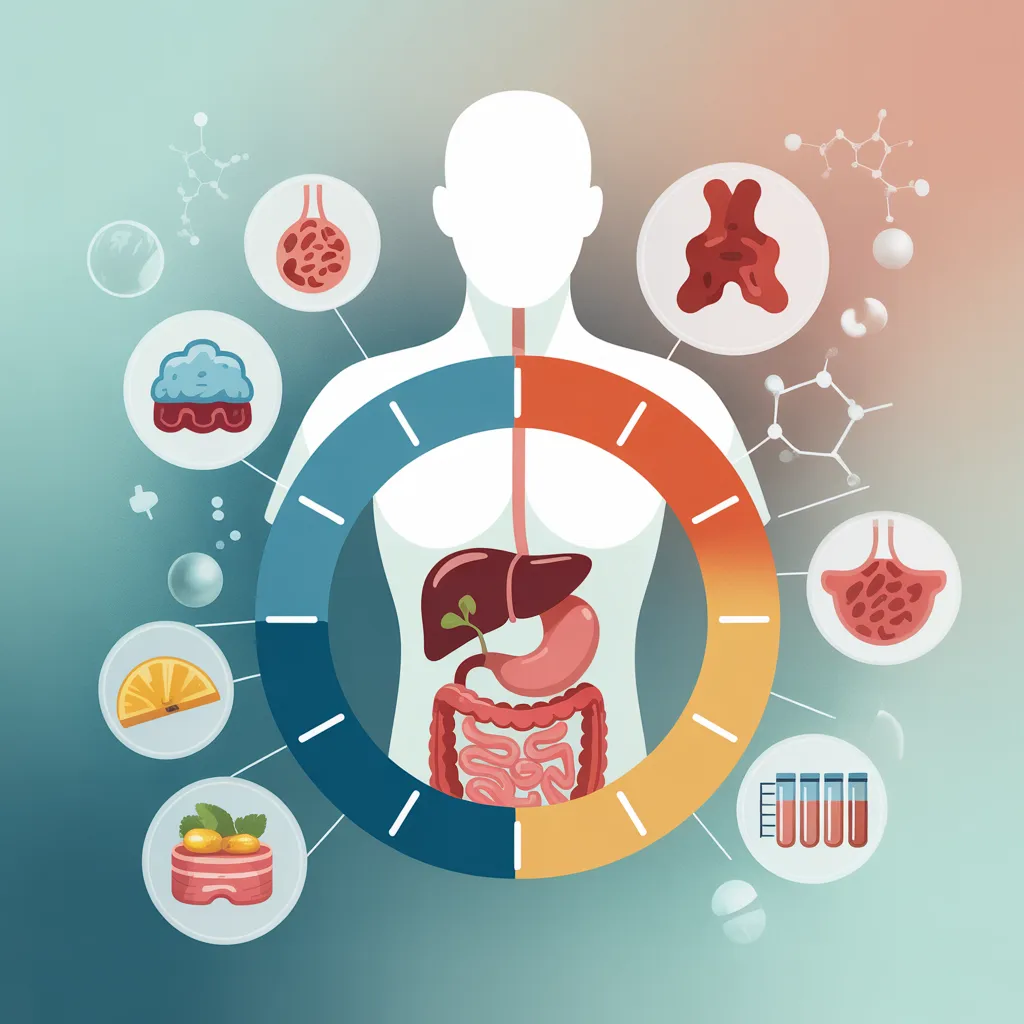
Fasting and Insulin Sensitivity
Insulin resistance causes type 2 diabetes. It’s also a key factor in metabolic issues. Insulin stops working on your cells when your pancreas makes more of it. High circulating insulin levels promote fat storage and inhibit fat burning.
Fasting lowers insulin levels consistently.
A 2019 study in Cell Metabolism looked at 19 adults with metabolic syndrome. They followed a 10-hour time-restricted eating plan. Participants lost about 3% of their body weight. They also lowered their insulin levels by 3%. This happened without any diet changes.
A 2020 meta-analysis in Obesity Reviews examined 27 trials on intermittent fasting. Researchers found significant reductions in fasting insulin across multiple fasting protocols. Lower insulin means your cells become more sensitive to it again.
Fasting and Blood Sugar Control
Blood sugar dysregulation develops slowly.
Many people have high blood sugar for years before being diagnosed with type 2 diabetes.
Fasting gives your pancreas a rest. It lowers the need for insulin. This helps keep blood glucose stable at lower levels.
Dr Mark Mattson and his team did a 2019 study in the New England Journal of Medicine. They reviewed many years of research on intermittent fasting. Time-restricted eating lowered blood glucose levels. Alternate-day fasting did the same. This helped people with pre-diabetes and metabolic syndrome.
In 2018, BMJ Case Reports published a study. It shared how three patients with type 2 diabetes reversed their diagnoses. They followed a supervised fasting plan under a doctor’s care.
Fasting and Fat Metabolism
Your body stores energy in two forms: glycogen in your liver and muscles, and fat in adipose tissue. You cannot access fat stores efficiently when insulin is high.
Fasting lowers insulin and allows your body to shift toward fat oxidation. This is the metabolic switch. Researchers mention it when they discuss fasting. Fasting changes body composition.
A review in the Annual Review of Nutrition found that intermittent fasting aids fat loss. This fat loss is like what continuous caloric restriction can achieve.
Fasting helps keep lean muscle mass. It does this better than just cutting calories. This is true, especially when you also do resistance training.
Moreover, visceral fat, which is fat that is stored around your organs, responds best to fasting. A 2011 study in Obesity showed that 8 weeks of alternate-day fasting cut visceral fat mass by 14% in obese adults.
Fasting and Inflammation
Chronic low-grade inflammation drives metabolic disease.
C-reactive protein (CRP) and interleukin-6 (IL-6) are common markers for systemic inflammation.
Fasting reduces both.
A 2007 study in Free Radical Biology and Medicine found that fasting during Ramadan helped lower CRP levels. It also reduced homocysteine levels in healthy adults.
A 2019 study in Cell found that fasting reduced circulating monocyte levels. Monocytes are immune cells that contribute to inflammation. After refeeding, the reduction persisted for a period. Lead researcher Dr Filip Swirski said fasting helps inflammatory cells. They become less active and less aggressive.
The Types of Fasting That Research Supports
Time-Restricted Eating (TRE)
You eat all your meals within a defined window, typically 6 to 10 hours. Most people find a 16:8 protocol (16 hours fasting, 8 hours eating) sustainable. You eat between midday and 88 pm, for example.
Alternate Day Fasting (ADF)
You eat normally one day and then only about 500 calories the next. Studies have shown that this method lowers body fat, insulin levels, and LDL cholesterol by substantial amounts.
5:2 Protocol
For five days, you eat regularly, but on two days a week, you limit your calories to 500-600. A 2011 study in the International Journal of Obesity found that the 5:2 diet led to weight loss similar to that achieved with daily calorie cutting. It also improved insulin sensitivity more.
Prolonged Fasting
Fasting for 24 to 72 hours, typically done infrequently (monthly or quarterly). Research supports this for the induction of deep autophagy and immune system regeneration. A 2014 study in Cell Stem Cell found that fasting for 72 hours helps regenerate the immune system. This process uses stem cells.
Who Benefits Most from Fasting
People with pre-diabetes or type 2 diabetes experience major metabolic gains from fasting. The research consistently shows reductions in fasting glucose, insulin, and HbA1c.
People with elevated triglycerides or low HDL cholesterol also see measurable changes. A meta-analysis in Nutrition Reviews found that intermittent fasting helps lower triglyceride levels. It reduced them by 20% to 30% in several trials.
Fasting helps people with non-alcoholic fatty liver disease (NAFLD) by lowering liver fat. A 2020 study in Cell Metabolism found that time-restricted eating helped. After 12 weeks, it reduced liver fat by 3% in people with NAFLD.
Overweight and obese people often have better metabolic markers. They can do this without counting calories.
Practical Starting Points
Start with a 12-hour overnight fast. Eat dinner at 7 pm and breakfast at 7 am. Most people can achieve this, leading to clear drops in fasting glucose within 4 to 6 weeks.
Move to a 14 to 16-hour window once you are comfortable. Shift breakfast later rather than eating dinner earlier.
Eat your first meal after physical activity when possible. After exercise, your body is more sensitive to insulin. This means it directs nutrients to the muscle rather than fat storage.
Avoid breaking your fast with high-sugar foods. A large glucose load after a fasting period produces a sharp insulin spike. Break your fast with protein and fibre first.
Stay hydrated during fasting periods. Water, black coffee, and plain tea don’t break a fast. They also help with mental clarity while fasting.
What Fasting Will Not Do
Fasting is not a replacement for a poor diet. If you eat processed foods, refined carbs, and seed oils, you lose metabolic benefits. Keep your eating window healthy for better results.
Fasting does not build muscle on its own. Resistance training and adequate protein intake remain necessary for lean mass. Fasting complements these habits; it does not replace them.
Fasting is not appropriate for everyone.
Pregnant women should see a doctor before fasting. People with eating disorders must do the same. If you’re on insulin or blood pressure meds, talk to your doctor first.
The Bottom Line
Fasting works by tackling metabolic problems at their root. It lowers high insulin and blood sugar levels. It also reduces excess fat storage and inflammation, and helps cells clean up more effectively.
The evidence is consistent across different fasting methods, populations, and metabolic markers.
You do not need a complicated protocol.
A 16-hour fasting window can help improve blood sugar. It also boosts insulin sensitivity and body composition. You might see these changes in just 4 to 12 weeks. The research supports this.
Your metabolism reacts to not eating in ways that eating patterns can’t match.
Pick a method. Apply it consistently. Measure your results.
Author Bio
Zama Zincume is an avid researcher, evidence-based, plant-based wellness educator, author, and his research is focused on disease prevention, affordable nutrition, and African food systems.
