
Quick Answer:
Yes, affordable plant-based eating (Africa-focused) is possible.
In fact, it can be one of the cheapest ways to eat well when you use local staples like beans, lentils, maize meal, rice, sorghum, millet, seasonal vegetables, and fruit.
The big secret is simple: plan first, buy smart, and cook mostly from scratch.
In this guide, you will learn how to build a low-cost plant-based pantry, shop wisely in African markets, cook beans the easy way, and follow a simple 7-day meal plan.
You will also get quick meal ideas and common mistakes to avoid.
Quick Answer — Is Affordable Plant-Based Eating (Africa-Focused) Possible?
Yes—affordable plant-based eating (Africa-focused) works when you base meals on local staples (beans, grains, tubers, vegetables) and limit costly packaged “speciality vegan” items.
What “affordable” means in real life
Affordable does not mean you must eat the same meal every day. Instead, it means you can:
- Use budget staples as your base (beans, grains, and veg).
- Buy seasonal produce and shop where prices are better.
- Cook in batches to waste less food.
- Keep your meals simple but tasty.
So, even if food prices rise, you can still eat plant-based food without spending a fortune.
What “Plant-Based” Means Here (So You Don’t Overspend)
Plant-based vs vegan vs whole-food plant-based
These words can be confusing. So, let’s make it easy:
- Plant-based: You eat mostly plant foods. Some people still eat small amounts of animal foods.
- Vegan: You avoid all animal foods (and usually avoid animal products like leather too).
- Whole-food plant-based (WFPB): You focus on whole plant foods and limit ultra-processed foods.
For affordable plant-based eating (Africa-focused), the best money-saving approach is to eat mostly whole foods and treat packaged items as “sometimes foods.”
The money rule: “More whole foods, fewer packaged foods”
Here is a simple rule you can remember:
If it grows from the ground (or comes from a basic pantry bag), it is usually cheaper.
For example, dry beans are often cheaper than:
- canned beans
- plant-based sausages and burgers
- imported vegan snacks
- fancy “superfood” powders
This does not mean you can never buy these items. It simply means you will save more money if you don’t build your daily diet around them.
Why Affordable Plant-Based Eating Works in Africa
Africa already relies on budget-friendly staples
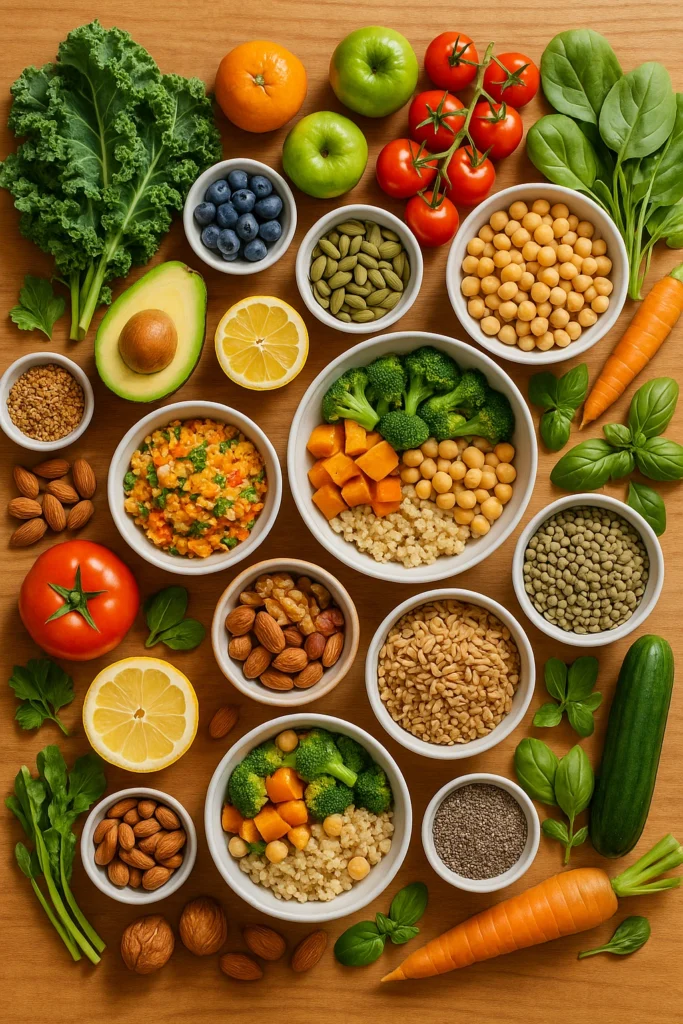
Across Africa, many traditional meals already use affordable staples like:
- cereals: maize, sorghum, millet, rice, wheat
- legumes: beans, lentils, cowpeas, peas, groundnuts (peanuts)
- tubers: potatoes, sweet potatoes, cassava, yams
- greens: spinach, cabbage, and local leafy greens
Because these foods are common and widely sold, you can often find them at better prices than imported or heavily processed foods.
The biggest cost trap: imported “health foods” and fake meats
Many people think plant-based eating means buying expensive items. However, the biggest budget trap is relying on:
- meat substitutes every day
- imported snacks and protein bars
- special “diet” products
- fancy ingredients you rarely use
Instead, you can eat very well with simple local foods. Next, let’s build your “budget plate.”
The 4-Part Budget Plate for Affordable Plant-Based Eating (Africa-Focused)
If you want affordable plant-based meals that keep you full, use this 4-part plate. It works in many African kitchens because it uses basic, familiar ingredients.
Part 1 — A starch staple (cheap energy)
Choose one:
- maize meal/pap/ugali
- rice
- oats
- sorghum or millet
- potatoes or sweet potatoes
- bread (preferably whole grain when possible)
Part 2 — A protein staple (cheap strength)
Choose one:
- beans (sugar beans, kidney beans, black beans, etc.)
- lentils
- split peas
- chickpeas
- soy options (like soya mince/TVP, tofu, where available)
Part 3 — A veg booster (cheap nutrition)
Use two types when you can:
- greens (spinach, cabbage, local leafy greens)
- colour (tomato, carrot, pumpkin, peppers, beetroot)
Part 4 — A flavour + fat helper (small but important)
Add one for taste and satisfaction:
- peanut butter or groundnuts
- sunflower seeds, pumpkin seeds, sesame
- avocado (when in season)
- a small amount of oil (optional)
- onions, garlic, spices, herbs, lemon/vinegar
Transition tip: Once you learn this plate, shopping becomes easier because you always know what to buy.
The Affordable Plant-Based Pantry List (Africa Staples First)
A good pantry helps you eat well even when money is tight. Also, it saves you from last-minute takeaways.
Dry staples that stretch meals
- maize meal
- rice
- oats
- sorghum or millet
- whole wheat flour (or regular flour if needed)
- pasta (optional, budget-friendly)
Budget plant proteins
- dry beans (different types for variety)
- lentils (fast-cooking and very budget-friendly)
- split peas
- chickpeas
- soya mince/TVP (optional for convenience)
Budget vegetables and fruit strategy
To save money, focus on what is seasonal and common. Also, choose vegetables that last longer, such as:
- cabbage
- carrots
- onions
- potatoes and sweet potatoes
- pumpkin or butternut
- Tomatoes (buy in season or use tinned tomatoes when needed)
For fruit, go for what is in season and affordable in your area. Even one fruit per day can make a big difference.
The “tiny but powerful” extras
- salt and pepper
- curry powder, paprika, mixed herbs
- stock cubes or stock powder (choose what fits your needs)
- vinegar or lemons
- peanut butter
- tea (unsweetened or lightly sweetened)
Next: Now that your pantry is ready, let’s talk about how to shop smart.
Smart Shopping Rules for Affordable Plant-Based Eating (Africa-Focused)
Rule 1 — Buy dry beans and lentils in bulk when possible
Dry beans and lentils usually cost less per meal than canned beans. They also last longer. If you can, buy bigger bags and store them in airtight containers.
Rule 2 — Choose seasonal produce (and shop where it’s cheaper)
Seasonal produce often costs less and tastes better. Also, local markets can offer better prices than smaller convenience shops.
Rule 3 — Plan meals before you shop
Before you spend money, decide on your meals for the week. Then write a list and stick to it. This one habit can cut your bill fast.
Rule 4 — Cook once, eat twice (batch cooking)
Batch cooking means you cook a large pot of food once, then eat it over 2–3 days. This saves:
- money (less waste)
- time (fewer cooking days)
- energy (less gas/electricity use)
Rule 5 — Limit “speciality vegan” items to treats
It’s okay to enjoy plant-based milks, vegan sausages, or vegan cheese sometimes.
However, if these become daily items, your budget will struggle. Instead, build daily meals from staples first, then add extras when you can.
How to Cook Beans and Lentils the Cheap Way (Africa-Friendly)
Soaking basics (when to soak, when not to)
Many beans cook faster when soaked.
Here’s an easy guide:
- Soak overnight: kidney beans, sugar beans, chickpeas
- No soaking needed: lentils, split peas (but you can rinse them)
To soak: cover beans with plenty of water, leave overnight, then drain and rinse before cooking.
Fast-cook tips
- Use lentils and split peas when you need a quick meal.
- If you have a pressure cooker, beans cook much faster.
- Cook a big pot and freeze portions.
Flavour-based method (simple and tasty)
Most affordable plant-based meals taste best when you start with a flavour base:
- Fry or sauté onions (with a little water or oil).
- Add tomatoes (fresh or tinned).
- Add spices (curry powder, paprika, mixed herbs).
- Then add beans/lentils and simmer.
Storing cooked legumes safely
- Cool cooked beans quickly.
- Store in the fridge for 3–4 days.
- Freeze in small containers for quick meals later.
The 7-Day Affordable Plant-Based Meal Framework (Africa-Focused)
How to build a weekly plan in 15 minutes
- Pick 2–3 main dishes you can cook in big pots.
- Choose 2 easy breakfasts.
- Pick 2 quick lunches (often leftovers).
- Write your grocery list from your plan.
The “3 base meals” strategy (rotate flavours)
Choose three base meals and rotate flavours:
- Base 1: beans + tomato + onions (add curry or paprika)
- And Base 2: lentil stew (add mixed veg)
- Base 3: vegetable stir-fry (serve with rice or pap)
Because you change spices and sides, meals don’t feel boring.
Breakfast ideas (cheap + filling)
- oats with banana (and a spoon of peanut butter if you have it)
- sorghum or millet porridge with fruit
- toast with peanut butter
- leftover pap with a simple bean sauce (yes, it can work!)
Lunch ideas (leftovers that travel well)
- rice + lentil stew
- beans + cabbage + pap
- chickpea salad (chickpeas + onion + tomato + lemon)
Dinner ideas (one-pot meals)
- bean stew with greens
- lentil curry with rice
- vegetable soup with split peas
Snacks and drinks that don’t drain your budget
- fruit (in season)
- roasted groundnuts
- unsweetened tea
- popcorn (simple, not sugary)
Sample 7-Day Affordable Plant-Based Eating (Africa-Focused) Menu (With Swaps)
Note: This is a simple example. Swap foods based on your region, prices, and what you enjoy.
Day-by-day menu
- Day 1: Oats + banana (breakfast); Lentil stew + rice (lunch); Bean stew + greens + pap (dinner)
- Day 2: Porridge + fruit; Leftover bean stew (lunch); Vegetable stir-fry + rice
- Day 3: Toast + peanut butter; Chickpea salad + bread; Split pea soup + potatoes
- Day 4: Oats + peanut butter; Leftover soup; Lentil curry + rice + cabbage
- Day 5: Millet/sorghum porridge; Leftover lentils; Bean “chakalaka-style” mix + pap
- Day 6: Toast + fruit; Rice + veggie mix; Potato and bean stew + greens
- Day 7: Oats; Leftovers; Simple vegetable soup + lentils
Easy swaps by region (West, East, Southern Africa)
- Southern Africa: pap/maize meal + beans + greens
- East Africa: ugali + beans/lentils + sukuma wiki-style greens
- West Africa: beans + tubers + leafy greens + peanut-based sauces
15 Ultra-Budget Plant-Based Meals Using African Staples
Here are quick meal ideas. Each one is simple, affordable, and flexible.
One-pot meals
- Bean and tomato stew with cabbage
- Lentil curry with mixed vegetables
- Split pea soup with carrots and potatoes
- Groundnut (peanut) stew with greens
- Vegetable soup with lentils
Quick pan meals
- Stir-fried cabbage and carrots with beans
- Tomato-onion bean “relish” for pap or rice
- Potato and onion hash with chickpeas
- Simple veggie mix with soya mince (optional)
- Pan-fried mushrooms (when affordable) with rice
No-fuss meals
- Chickpea salad (chickpeas + onion + tomato + lemon)
- Peanut butter sandwich + fruit
- Oats with banana and cinnamon
- Leftover lentil stew in a wrap/bread
- Rice bowl: rice + beans + greens
Can a Cheap Plant-Based Diet Still Be Healthy?
Yes. Cheap plant-based eating can be healthy when you choose a good balance of staples and vegetables. You don’t need fancy foods to eat well.
The “healthy diet” basics (simple checklist)
- Eat beans or lentils most days
- Eat vegetables daily (especially greens)
- Choose whole grains often when possible
- Include fruit when you can
- Drink water often
- Limit sugary drinks and ultra-processed snacks
Protein on a budget (beans + grains = teamwork)
Many people worry about protein. However, you can get protein from:
- beans and lentils
- split peas and chickpeas
- groundnuts and seeds
- whole grains
Also, beans and grains work well together. For example, rice + beans or pap + beans is a strong, filling combination.
Key nutrients to watch (simple guidance)
Here are nutrients people often ask about:
- Vitamin B12: Many plant-based eaters use a supplement or fortified foods.
- Iron: Beans, lentils, and greens can help. Pair with vitamin C foods (like tomatoes or citrus) when possible.
- Omega-3: Chia, flax (if available), and some seeds can help.
- Iodine: This depends on your salt choice and local foods.
Tip: If you have health conditions, talk to a qualified healthcare professional for personal advice.
Common Mistakes That Make Affordable Plant-Based Eating (Africa-Focused) Expensive
Buying too many packaged vegan foods
Packaged vegan foods can be convenient, but they often cost more. If you buy them daily, your budget will feel tight.
Not planning and wasting food
When you buy without a plan, food can spoil. Planning helps you use what you buy.
Skipping legumes and relying on pricey proteins
If you avoid beans and lentils, you may spend more on other protein foods. Legumes are one of the best budget tools you have.
How to Eat Plant-Based When Food Prices Rise (Inflation Tips)
Replace pricey items with staples
When prices rise, go back to basics. Staples are often the most cost-effective foods.
Stretch meals with beans and vegetables
Add more beans and vegetables to stretch meals without losing nutrition.
Build a “budget buffer” pantry
Keep a small extra supply of dry staples if you can. Then, when prices jump, you still have food at home.
Affordable Plant-Based Eating (Africa-Focused) by African Food Culture
Southern Africa: simple, filling patterns
Many meals can follow a pattern like: pap + beans + greens. Add onions, tomatoes, and spices for flavour.
East Africa: strong staple meals
A common pattern is ugali + legumes + greens. You can also use millet or rice, based on what is affordable.
West Africa: hearty sauces and stews
Many West African meals use beans, leafy greens, tubers, and often groundnut-based sauces. These can be very budget-friendly when cooked at home.
Affordable Plant-Based Eating on a Budget Without a Big Kitchen
No oven / no blender solutions
You do not need fancy tools. You can cook most budget meals with:
- one pot
- one pan
- a knife
- a spoon
Minimal tools list
- large pot with lid
- frying pan
- colander or strainer
- containers for leftovers
- optional: pressure cooker (big time-saver)
Affordable Plant-Based Eating (Africa-Focused) for Families
Bulk cooking for a family size
Families save money when they cook in large pots. For example:
- A big bean stew for 2–3 days
- And a big pot of rice or potatoes
- A large pan of cabbage, carrots, and onions
Kid-friendly budget meals
- lentil curry with rice
- bean stew with pap
- oats with banana
- peanut butter sandwiches with fruit
Budget lunchbox ideas
- rice + beans + veggies
- leftover lentil stew in bread
- fruit + groundnuts
- homemade popcorn
FAQ — Affordable Plant-Based Eating (Africa-Focused)
Is plant-based eating cheaper than eating meat in Africa?
It can be cheaper, especially when you use local staples like beans, lentils, grains, and seasonal vegetables. However, it can become expensive if you rely on packaged vegan meats, imported snacks, and convenience foods.
What are the cheapest plant-based protein foods?
In many places, the cheapest plant-based proteins are beans, lentils, split peas, chickpeas, and groundnuts. Also, soya mince can be cost-effective for some households when used wisely.
How do I eat plant-based on a budget without soy?
You can skip soy and still do well. Focus on beans, lentils, chickpeas, split peas, groundnuts, seeds, and whole grains. Then build meals with vegetables and simple seasonings.
What should I buy first for a cheap plant-based pantry?
Start with a few staples you will truly use: rice or maize meal, oats, beans or lentils, onions, tomatoes (or tinned), cabbage, carrots, and a basic spice mix. Then add more items slowly.
How can I meal prep plant-based food to save money?
Pick 2–3 large-pot meals for the week, cook them in batches, and store portions in the fridge or freezer. This reduces waste and helps you avoid last-minute takeout spending.
Are canned beans okay if I’m busy?
Yes. Canned beans can save time. If they fit your budget, use them sometimes. Still, dry beans are usually cheaper per meal, so many people use them most of the time and canned beans only in emergencies.
What is the simplest, cheap plant-based meal?
One of the simplest meals is beans, a starch, and greens. For example: pap + bean stew + cabbage, or rice + lentils + spinach. It is simple, filling, and flexible.
Do I need supplements on a budget plant-based diet?
Many plant-based eaters consider vitamin B12 important. Other needs depend on your diet, your health, and your lab results. If you are unsure, speak to a qualified healthcare professional.
Final Tips for Affordable Plant-Based Eating (Africa-Focused)
Start small, stay consistent
You do not need to change everything overnight. Instead, start with one simple step, like adding beans to your weekly meals. Then keep going.
Your next 3 steps
- Pick 3 budget meals you can cook this week.
- Shop using a list (and avoid impulse buys).
- Cook in batches, so you always have food ready.
Bottom line: Affordable plant-based eating (Africa-focused) is not about being perfect. It is about using local staples, cooking simply, and making smart choices again and again.
