
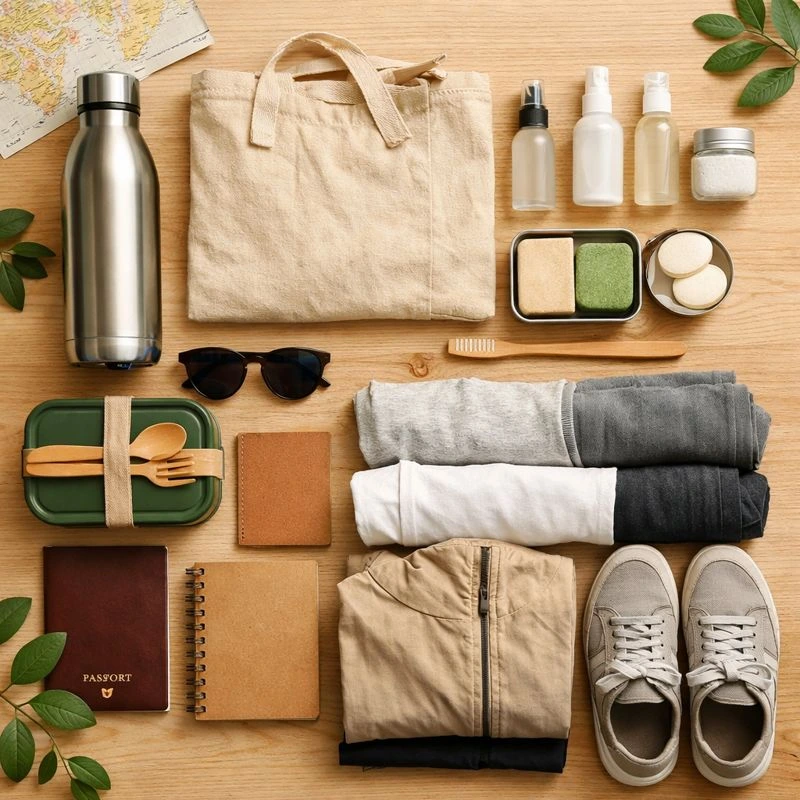
Packing for travel does not have to be stressful, expensive, or wasteful. In fact, learning how to pack for sustainable travel can make your trips easier, lighter, and more enjoyable.
Sustainable travel packing means packing light, using reusable items, and skipping single-use waste. You do not need special gear or a perfect eco lifestyle.
Small changes already make a big difference.
In this guide, I will show you exactly how to pack for sustainable travel, step by step.
You will learn what to pack, what to skip, and how to travel lighter while still feeling prepared.
How to Pack for Sustainable Travel in 10 Minutes (Quick Plan)
If you are short on time, start here.
This simple plan covers the basics of sustainable travel packing.
First, plan before you pack. Check the weather, trip length, and activities. This alone helps you pack less.
Second, bring reusables. A water bottle, shopping bag, and food container reduce waste fast.
Third, switch to solid toiletries. Bars take up less space and avoid plastic.
Fourth, pack clothes you can rewear. Choose mix-and-match items.
Finally, follow local rules. Some places ban plastic bags or protect nature areas.
If you do only three things, make them these: bring a reusable bottle, use solid toiletries, and pack fewer clothes.
What Does Sustainable Travel Packing Mean?
Sustainable travel packing means reducing waste, saving resources, and respecting your destination.
In simple terms, it means:
- Packing only what you need.
- Choosing reusable and durable items.
- Avoiding single-use plastics
- Using what you already own.
It does not mean buying lots of “eco” products. In fact, the most sustainable option is often what you already have.
When you pack with intention, you travel lighter. Lighter bags reduce stress, allow more effortless movement, and often cut transport emissions.
Source: YouTube/Alyssa Barber
Step 1: Plan to Pack Light for Sustainable Travel
Before you touch your suitcase, take a few minutes to plan. Planning is the most critical step in sustainable travel packing.
Check the Weather and Activities First
Look up the weather forecast and planned activities. This helps you avoid packing items “just in case” that you never use.
If it is warm during the day and cool at night, plan for layers rather than heavy items.
Use a Simple Capsule Plan
A capsule wardrobe means clothes that work together. Choose neutral colours and basic pieces you can mix and match.
For example:
- 3–4 tops
- 2 bottoms
- 1 warm layer
- 1 comfortable outfit for travel days.
You can rewear clothes more than once. That is normal and practical.
Borrow, Rent, or Buy Locally
Some items do not need to travel with you. Think about borrowing, renting, or buying locally instead.
For example:
- Beach towels.
- Sports gear.
- Cold-weather jackets for short trips.
The Golden Rule: Pack for 7 Days
Even for longer trips, pack for about 7 days and plan to wash clothes. This reduces luggage size and overpacking.
Step 2: Choose Sustainable Luggage and Packing Organisers
Your bag matters, but you do not need to buy a new one.
Use What You Already Own
The most sustainable luggage is the one you already have. A backpack, duffel bag, or suitcase can all work.
Only replace luggage if it is broken beyond repair.
If You Buy, Choose Durable Options
If you genuinely need new luggage, choose:
- Strong materials
- Repairable zips and wheels
- Simple designs that last many years.
Avoid fast-fashion luggage that breaks quickly.
Packing Cubes (Use Them Wisely)
Packing cubes help organise items, but they should help you pack less, not more.
Use one cube for clothes and one for underwear. If it does not fit, remove items.
Bring One Foldable Day Bag
A small foldable backpack or tote works for day trips, shopping, and beach days. One bag is enough.
Step 3: Sustainable Travel Clothing (Capsule Wardrobe)
Clothing often takes up the most space. Packing smarter makes a big difference.
Choose Rewear-Friendly Basics
Pick clothes that:
- Do not show dirt easily.
- They are comfortable for long days.
- It can be dressed up or down.
Neutral colours like black, grey, navy, or beige work well.
Pick Better Fabrics
Choose fabrics that:
- Dry quickly.
- Breathe well.
- Need fewer washes.
The fewer times you wash clothes, the more water and energy you save.
Shoes: Less Is More
Most trips only need two pairs of shoes:
- One comfortable walking pair.
- One nicer or lighter option.
Wear the heavier shoes during travel.
Layer Instead of Packing Heavy Items
Layers give flexibility. A light jacket, sweater, or scarf can handle many conditions without bulk.
Avoid Buying “Travel-Only” Clothes
Buying cheap clothes for one trip creates waste. Rewear what you already own or buy quality items you will use again.
Step 4: How to Pack Sustainable Toiletries (Low-Waste Basics)
Toiletries are a significant source of travel waste. Luckily, they are easy to improve.
Switch Liquids to Solids
Solid toiletries are one of the best swaps for sustainable travel.
Examples include:
- Bar soap.
- Shampoo bars.
- Conditioner bars.
They last longer, save space, and reduce plastic bottle use.
Use Refillable Containers
For items you still need in liquid form, decant them into small refillable bottles.
Avoid buying travel-size minis that create extra plastic waste.
Choose Reef-Safe and Gentle Products
If you travel to beaches or nature areas, choose mineral or reef-safe sunscreen. This helps protect marine life.
Reusable Personal Care Items
Optional but helpful items include:
- Reusable razor.
- Washcloth instead of cotton pads.
- Menstrual cup or reusable products (if suitable).
Stay Airport-Ready
Keep liquids under carry-on limits. Pack solids to avoid issues at security.
Step 5: Reusables for Food and Drink (Must-Have Items)
Food and drink waste is one of the easiest problems to fix.
Reusable Water Bottle
A reusable bottle is the number one sustainable travel essential. Many airports, hotels, and public places offer refill stations.
Reusable Coffee Cup or Flask
If you buy drinks on the go, a reusable cup reduces waste quickly.
Cutlery and Straw (If You Will Use Them)
Only pack reusable cutlery if you know you will use it. Do not pack items that stay unused.
Food Container or Snack Bag
A small container works for leftovers, snacks, or takeaway food.
Foldable Shopping Bag
A cloth or foldable bag is helpful for markets, groceries, and beach days.
Step 6: Sustainable Tech Packing
Tech items add weight and waste if overpacked.
Bring Fewer Devices
Ask yourself if one device can do multiple jobs. A phone may replace a camera, a map, and a guidebook.
Pack Smarter Chargers
Bring:
- One multi-port charger.
- One cable that fits various devices.
This saves space and reduces clutter.
Follow Battery Safety Rules
Power banks and spare batteries usually belong in carry-on luggage. Always check airline rules before flying.
Step 7: Do Laundry the Low-Impact Way
Doing laundry while travelling helps you pack less.
Pack a Small Laundry Soap Option
Laundry sheets or a small soap bar work well and take little space.
Wash Less, Air-Dry More
Wear clothes more than once when they are clean. Air-dry clothes instead of using dryers whenever possible.
Simple Sink-Wash Routine
A quick sink wash with soap can refresh clothes overnight.
Step 8: Pack With Respect for Your Destination
Sustainable travel also means respecting local rules and nature.
Know Local Plastic Rules
Some destinations ban plastic bags or single-use items. Bring your own reusables to avoid issues.
Follow Leave No Trace Principles
If you visit nature areas:
- Take all the waste with you.
- Stay on marked paths.
- Avoid disturbing plants and animals.
Support Local Options
Buy from local markets and refill stations when available. This often reduces packaging and supports local communities.
Common Mistakes When Packing for Sustainable Travel
Even well-intended travellers make mistakes. Here are easy fixes.
Buying Too Much “Eco” Gear
Buying items you do not use still creates waste. Choose function over trends.
Packing Too Many Clothes
Overpacking leads to heavier bags and unused items. Pack less and wash more.
Forgetting the Key Reusables
Always remember your top five:
- Water bottle
- Shopping bag
- Solid toiletries
- Food container
- Cloth or towel.
Ignoring Travel Rules
Always check liquid limits and battery rules to avoid last-minute stress.
Sustainable Travel Packing Checklist (Copy and Save)
Clothing
- Capsule wardrobe
- Comfortable shoes
- Light layers
Toiletries
- Solid soap and shampoo
- Refillable bottles
- Sunscreen
Reusables
- Water bottle
- Shopping bag
- Food container
Tech
- Phone and charger
- Power bank (if needed)
Documents
- Passport
- Tickets
- Travel insurance
FAQ: How to Pack for Sustainable Travel
How do you pack sustainably for travel?
Pack light, bring reusables, switch to solid toiletries, and avoid single-use plastics.
What are the best sustainable travel essentials?
A reusable water bottle, solid toiletries, a cloth bag, and versatile clothing.
How can I pack light and still be eco-friendly?
Plan outfits, rewear clothes, and wash items during your trip.
Are shampoo bars good for travel?
Yes. They last long, save space, and reduce plastic bottle use.
What should I avoid packing?
Avoid single-use items, cheap travel minis, and clothes you will not wear.
How do I reduce plastic waste while travelling?
Use refillable items, say no to plastic bags, and choose unpackaged food when possible.
Final Thoughts: Sustainable Travel Packing Is About Progress
You do not need to be perfect to pack for sustainable travel. Every small change helps.
Start with what you already own. Pack a little lighter each trip. Choose reusables where you can.
Over time, sustainable travel packing becomes easy, natural, and rewarding.
And best of all, you will spend less time managing your stuff and more time enjoying the journey.
